The Jewel of the Spice Isle: Uncovering the World of the Granada Dove 🕊️
Imagine a bird so rare, so deeply tied to its island home, that it exists nowhere else on Earth. Picture a creature whose gentle coo is the very whisper of a unique, vanishing ecosystem. Its plumage is not a riot of tropical color, but a subtle masterpiece of olive, white, and iridescent pink, perfectly designed to blend into the dappled sunlight of a dry, thorny forest. This is the Granada Dove, and it is one of the most beautiful and critically endangered birds on our planet.
Known locally as the «Well-Digger» or «Pea Dove,» this elusive bird is more than just Grenada’s national symbol; it is the living soul of the island’s unique dry forest habitat. But its world is shrinking, and its soft voice is fading. With a population numbering fewer than 100 individuals left in the wild, the Granada Dove is teetering on the precipice of extinction.
This article is an invitation to meet this extraordinary bird. We will explore its stunning, subtle beauty, uncover the secrets of its captivating world, understand the grave threats that have pushed it to the brink, and celebrate the passionate efforts being made to ensure that the Jewel of the Spice Isle does not become a ghost.
✨ An Understated Beauty: What Makes the Granada Dove Special?
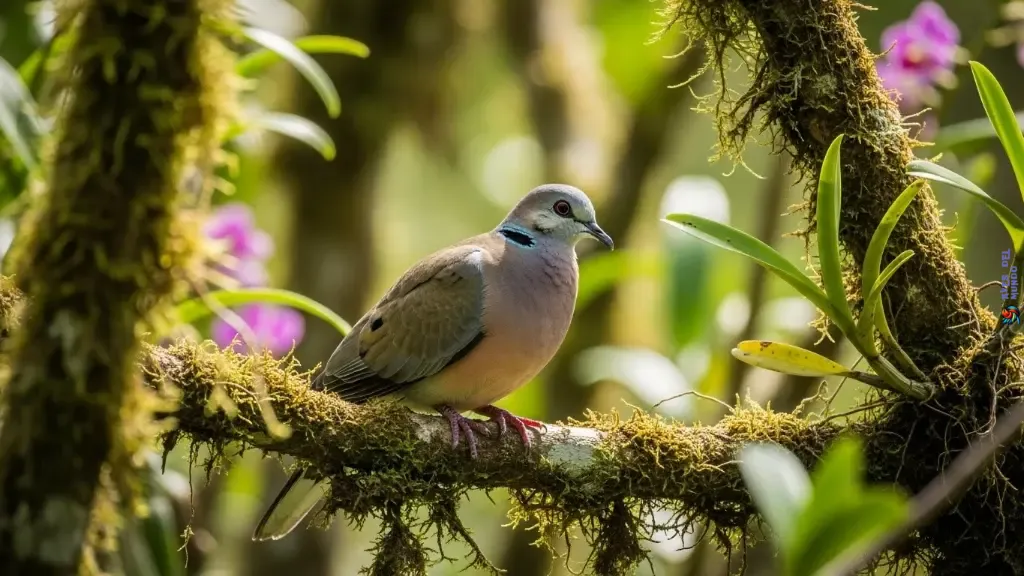
In a world of vibrant parrots and flashy tanagers, the beauty of the Granada Dove (Leptotila wellsi) is one of quiet elegance. It is a plump, ground-dwelling dove, about the size of a Mourning Dove, but its coloration is a delicate and intricate palette perfectly suited to its environment.
- A Face of Pure White: Its most striking feature is a pure white forehead and face, which transitions into a pale grey crown. This bright face stands in soft contrast to its body.
- A Pinkish Glow: The throat and breast are a beautiful, vinaceous pink, which can flash with a subtle iridescence in the right light, hinting at the preciousness of the bird.
- Earthy Tones: The upper body is a rich olive-brown, providing perfect camouflage as it forages among the leaf litter of the forest floor.
- A Hidden Signal: The underside of its tail feathers are tipped with white, creating a flash of brightness when the bird takes to flight—a quick signal to others in the dense undergrowth.
But perhaps its most captivating feature is its call. It is not a typical «coo-COO.» The male’s territorial call is a single, descending «hooooo» sound, repeated every few seconds. It is a haunting, mournful, and incredibly beautiful sound that, once heard, is never forgotten. It is the sound of the dry forest itself.
🌳 A Captivating World: The Thorny Paradise of the Dry Forest
To understand the Granada Dove, you must understand its home. It is a specialist, a creature perfectly adapted to one of the Caribbean’s most threatened ecosystems: the tropical dry scrub forest.
This is not the lush, wet rainforest you might imagine. The dove’s habitat is a tangle of thorny trees, cacti, and tough, deciduous shrubs that can withstand the long, harsh dry season. This unique environment provides everything the dove needs:
- Foraging Grounds: The doves are ground-foragers. They spend their days walking slowly and deliberately across the forest floor, using their feet to «dig» (hence the name «Well-Digger») through the leaf litter in search of seeds, fallen fruits, and the occasional insect.
- Nesting Sites: They build their nests in the low, tangled branches of the scrubby trees, creating a simple platform of twigs where they typically lay just two precious, creamy-white eggs.
- A Fragile Haven: The Granada Dove shares this habitat with other unique species, like the Grenadian hook-billed kite. The entire ecosystem is a delicate web of life, found only in a few small pockets on the western coast of Grenada and its offshore islands.
Currently, the two most significant remaining populations are found in the Perseverance and Mount Hartman protected areas on the southwestern tip of Grenada. These small sanctuaries are the last strongholds for this remarkable bird.
💔 A Story of Peril: On the Brink of Extinction
The Granada Dove is classified as Critically Endangered by the IUCN Red List. This is the highest level of threat before «Extinct in the Wild.» With a population estimated to be below 100 mature individuals, every single bird is precious. The threats it faces are a tragic story of habitat loss and introduced dangers.
1. The Vanishing Forest 🏗️
The single greatest threat to the Granada Dove is the destruction of its specialized dry forest home.
- Development Pressure: The dove’s prime habitat on the coast is also prime real estate for tourism development (hotels and resorts), housing, and infrastructure projects like roads and golf courses. The construction of the St. George’s University campus and other developments have fragmented and destroyed key parts of its historical range.
- Charcoal Production and Agriculture: The cutting of trees for charcoal production and the clearing of land for small-scale agriculture puts constant pressure on the remaining forest fragments.
- Habitat Fragmentation: Even when the forest isn’t completely cleared, a new road or building can cut a habitat in two. This creates small, isolated «islands» of forest, making it difficult for the doves to move between areas to find food and mates, leading to a loss of genetic diversity.
2. The Threat of Introduced Predators 🐾
Like many island species that evolved without ground predators, the Granada Dove is incredibly vulnerable to introduced animals.
- The Unholy Trinity: The mongoose, introduced by humans to control snakes, is a devastating predator of ground-nesting birds and their eggs. Feral cats and rats also pose a huge threat, preying on both eggs and adult birds. The doves simply have no natural defense against these efficient hunters.
- Opossums: The common opossum, another introduced species, is also a known predator of the doves’ nests.
3. The Human Factor and Climate Change
- Cyclones: Grenada lies within the hurricane belt. A single, powerful hurricane could potentially wipe out a significant portion of the dove’s already fragile population and its nesting habitat. Hurricane Ivan in 2004 caused severe damage to the forests.
- Human Disturbance: The noise and activity from nearby roads, construction, and even eco-tourists who don’t follow proper protocols can cause stress, disrupting the doves’ breeding and foraging behavior.
The combination of a shrinking home and an army of new predators has created a perfect storm, pushing the Jewel of the Spice Isle to the very edge.
🌱 A Story of Hope: The Fight to Save a National Treasure
The situation is dire, but it is not hopeless. A dedicated coalition of local conservationists, government agencies, and international partners are working tirelessly to pull the Granada Dove back from the brink. The fight to save this bird is a source of immense national pride.
1. Protecting the Last Sanctuaries 🛡️
The primary strategy is to protect what’s left.
- The Mt. Hartman National Park and Perseverance Protected Area: These areas are legally designated to protect the dove’s habitat. The Grenadian government, along with organizations like the Grenada Dove Conservation Programme, works to manage these lands, patrol for illegal activities, and restore degraded areas.
- Predator Control: A crucial and ongoing effort involves the systematic trapping and removal of mongooses, rats, and feral cats from within the protected areas, especially during the dove’s breeding season. This gives the nests a fighting chance.
2. Research, Monitoring, and a Head Start 🔬
You can’t protect what you don’t understand. Researchers are working to learn everything they can about the dove’s life.
- Population Monitoring: Teams of dedicated field biologists regularly walk transects through the forest, listening for the distinctive «hooooo» call to count the birds and map their territories. This data is essential for tracking whether the population is stable, increasing, or decreasing.
- Captive Breeding & Head-Starting: In a bold and hopeful move, a «head-starting» program was initiated. Eggs are carefully collected from wild nests, incubated in a secure facility, and the chicks are hand-reared until they are old enough to be less vulnerable to predators. They are then released back into protected, predator-controlled areas. This is a complex and intensive strategy, but it has shown promise in boosting the population.
3. Public Awareness and Eco-Tourism 📣
Saving the Granada Dove requires the support of the Grenadian people and the wider world.
- National Pride: The dove is on Grenada’s stamps, featured in educational materials, and is a symbol of the nation’s unique natural heritage. Public awareness campaigns in schools and communities are crucial for building local support for conservation.
- Responsible Tourism: Birdwatchers and eco-tourists travel from around the world for a chance to see the Granada Dove. When done responsibly, with local guides and strict protocols to avoid disturbing the birds, this can provide a powerful economic incentive for conservation. It proves that the dove is worth more alive than the resort that might be built in its place.
Conclusion: A Whisper of Hope in the Forest
The Granada Dove is a symbol of so much more than just a single species. It represents the fragility of island ecosystems, the beauty of quiet and specialized creatures, and the profound responsibility we have to protect the world’s unique biodiversity. Its story is a stark reminder that extinction is forever, and the loss of even the smallest, most elusive creature leaves our world immeasurably poorer.
But its story is also one of immense hope. In the tireless work of the researchers, the passion of local conservationists, and the growing pride of the Grenadian people, we see a powerful commitment to action. The gentle, descending «hooooo» of the Granada Dove is faint, but it has not been silenced. It is a whisper from a thorny, beautiful world, calling on us to listen, to care, and to act before the whisper fades into eternal silence.
What can individuals do to help critically endangered species like the Granada Dove, even from afar? Share your ideas and support in the comments below! 👇
❓ Frequently Asked Questions about the Granada Dove
Q1: What is the Granada Dove’s national significance?
A: The Granada Dove is the national bird of Grenada. It is a powerful symbol of the country’s unique natural heritage and is featured on national stamps and in conservation branding. Protecting the dove is a matter of national pride.
Q2: Is it possible for a tourist to see a Granada Dove?
A: Yes, but it requires patience, luck, and a responsible approach. The best way is to hire a knowledgeable local guide who understands the bird’s habitat and the strict protocols for observing it without causing disturbance. The Mt. Hartman National Park is the most likely place to catch a glimpse or, more likely, hear its distinctive call.
Q3: Why is it called the «Well-Digger»?
A: This local name comes from the dove’s unique foraging behavior. It walks along the forest floor and uses its feet to vigorously kick and scratch away the dry leaf litter to uncover seeds and insects, appearing as if it is «digging a well.»
Q4: Has the captive breeding or head-starting program been successful?
A: The program has shown promising early results. It is an intensive and difficult process, but several hand-reared birds have been successfully released into protected habitats. This strategy is seen as a critical «insurance policy» to help bolster the wild population while the larger work of habitat protection and predator control continues. It’s a key part of a multi-pronged approach to saving the species.